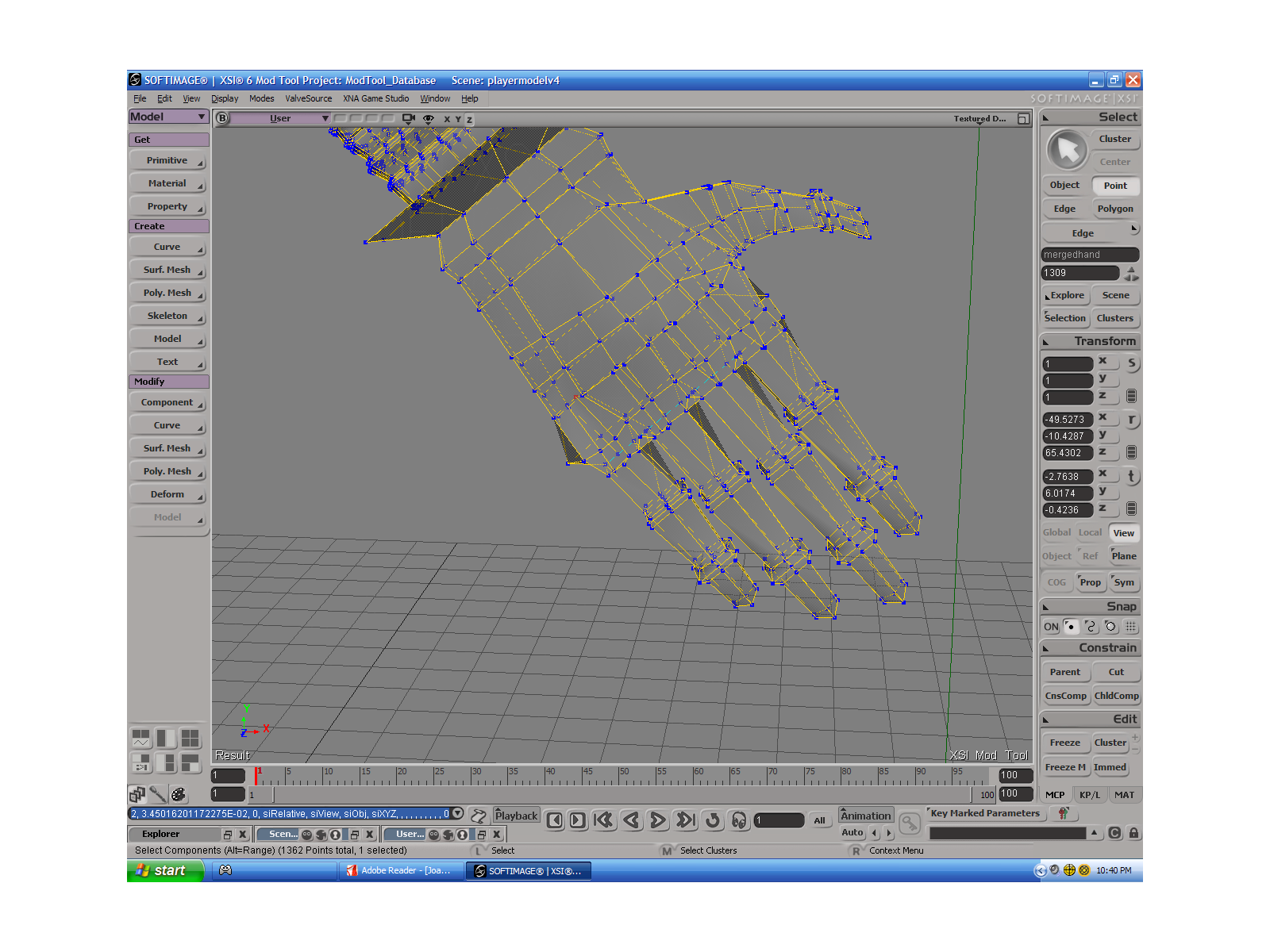
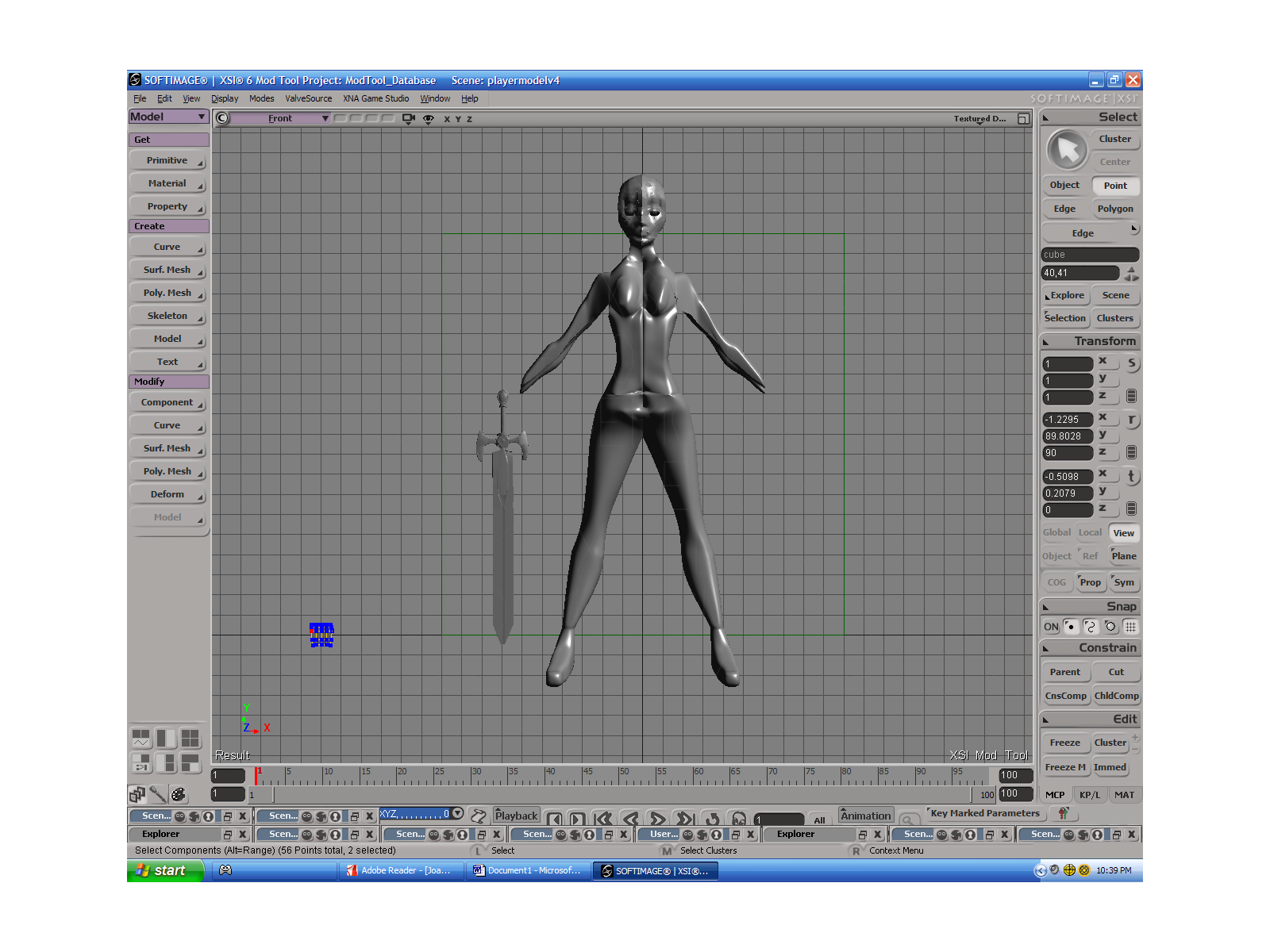
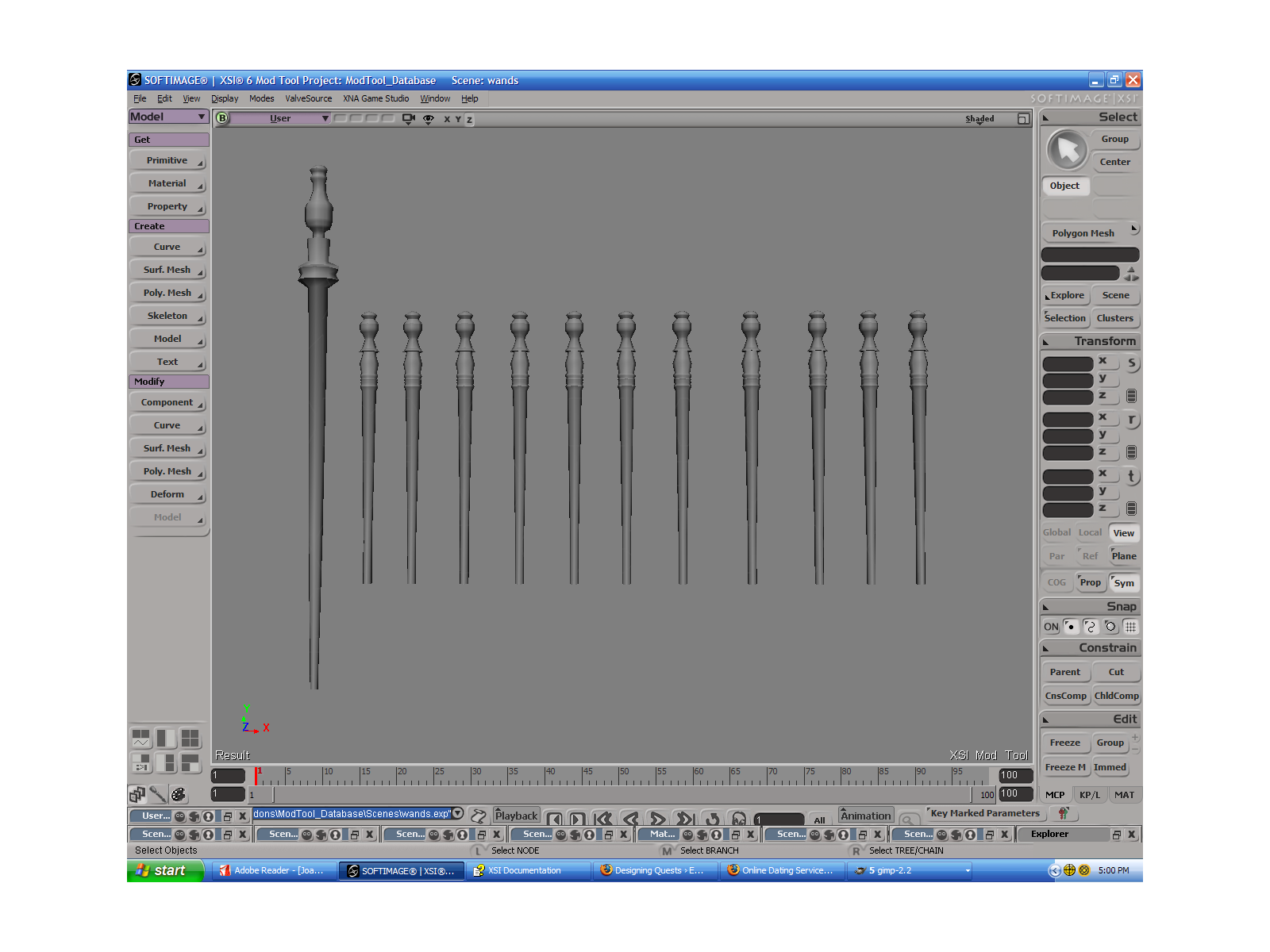
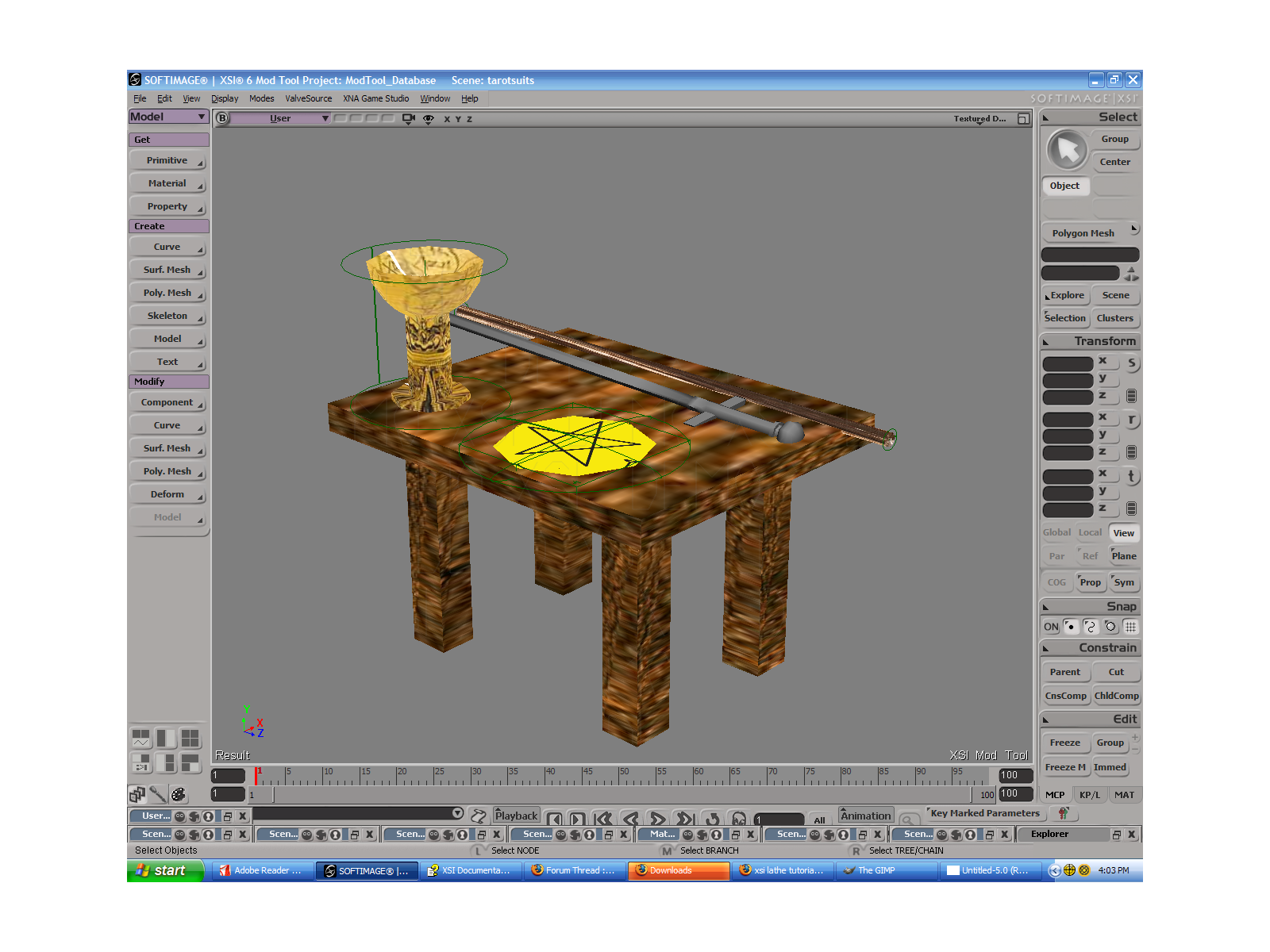
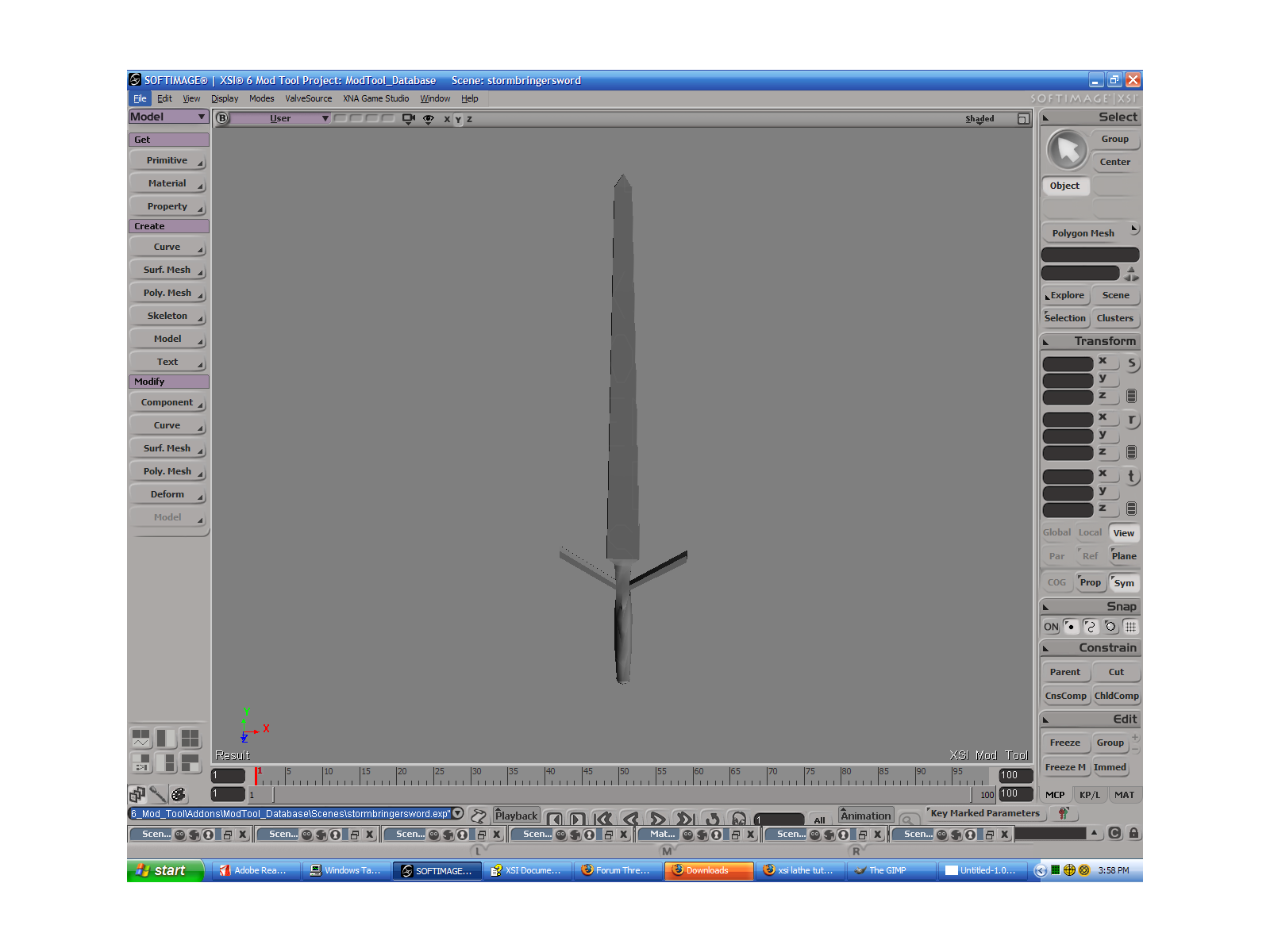
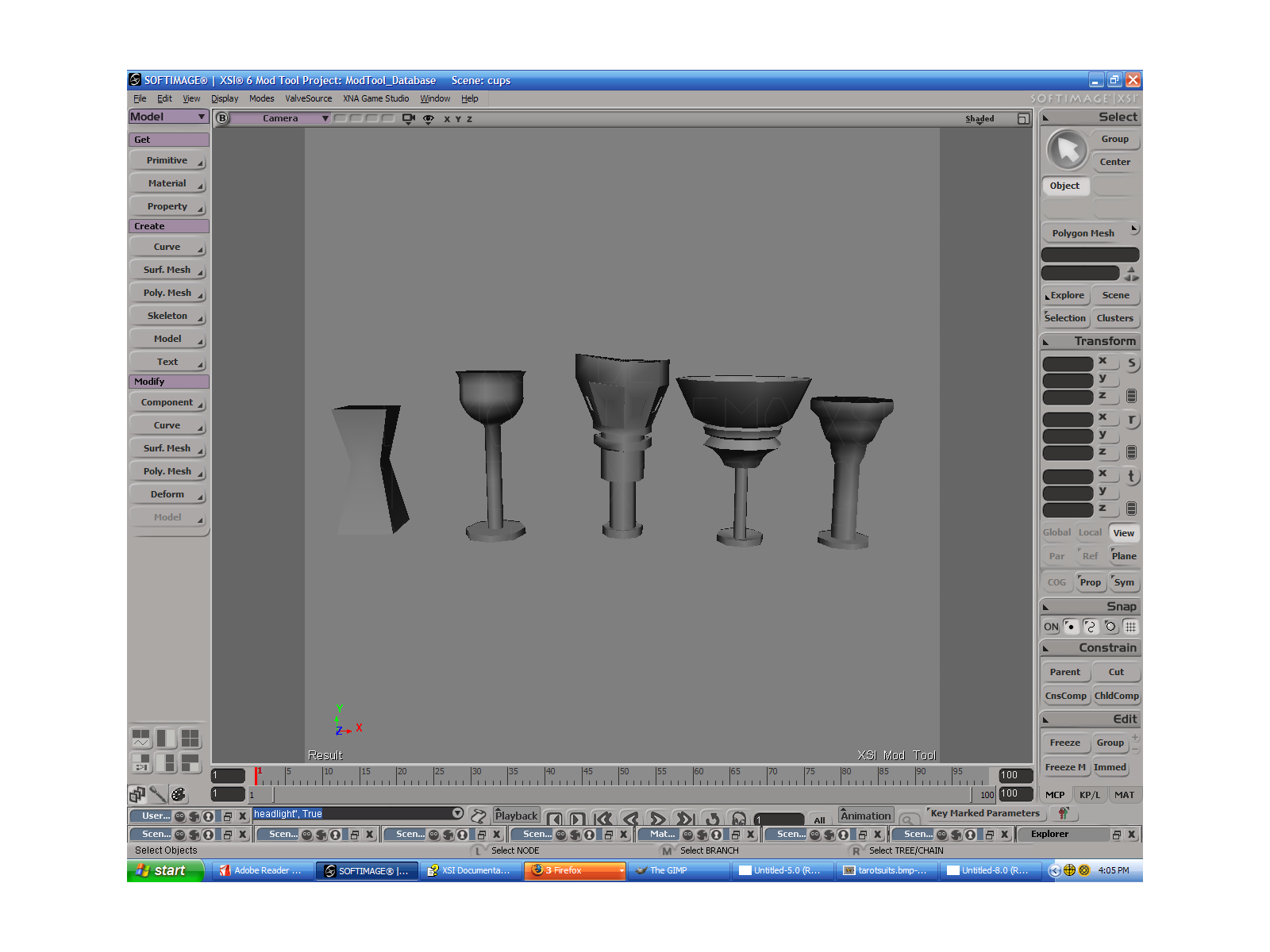
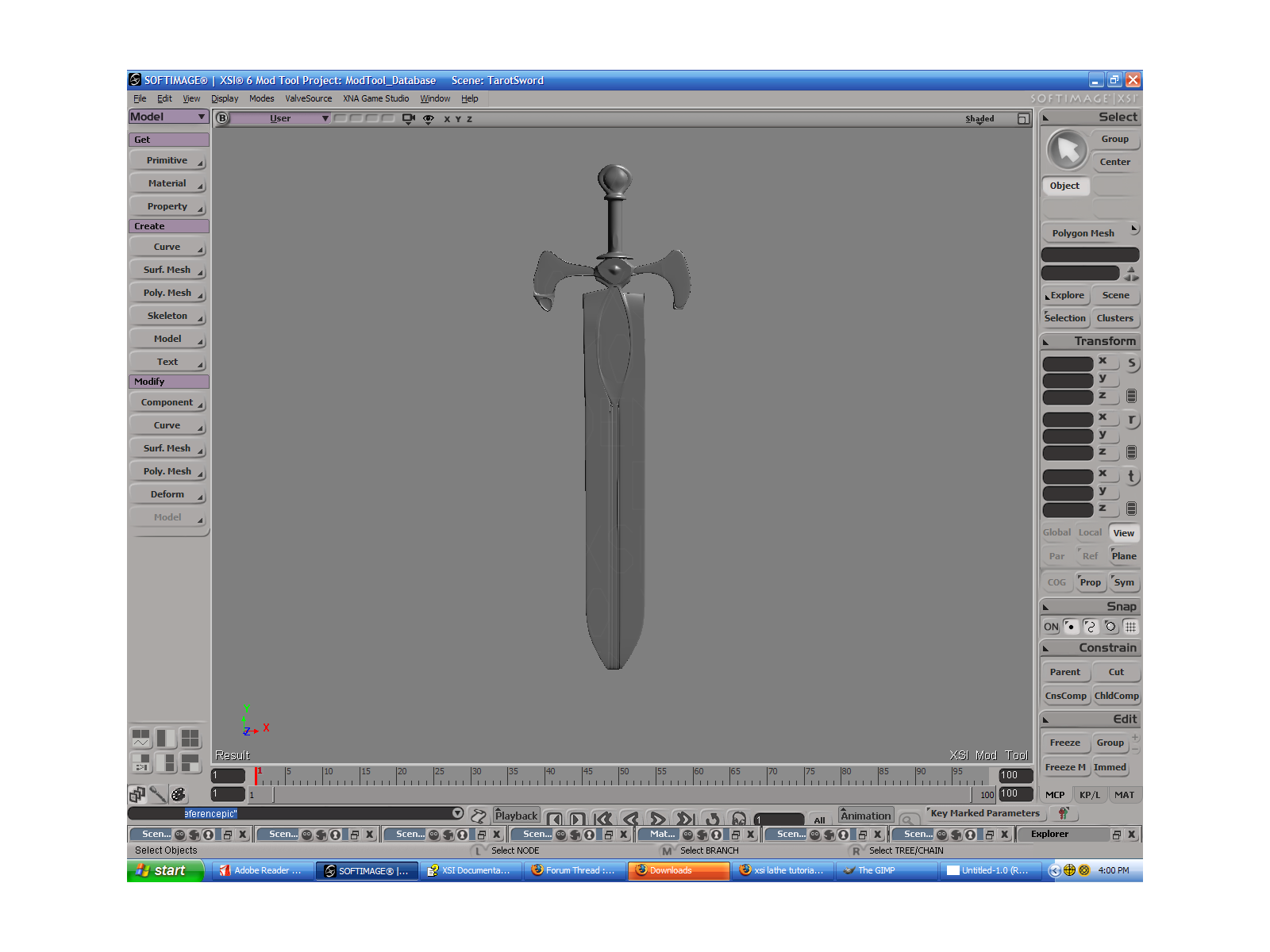
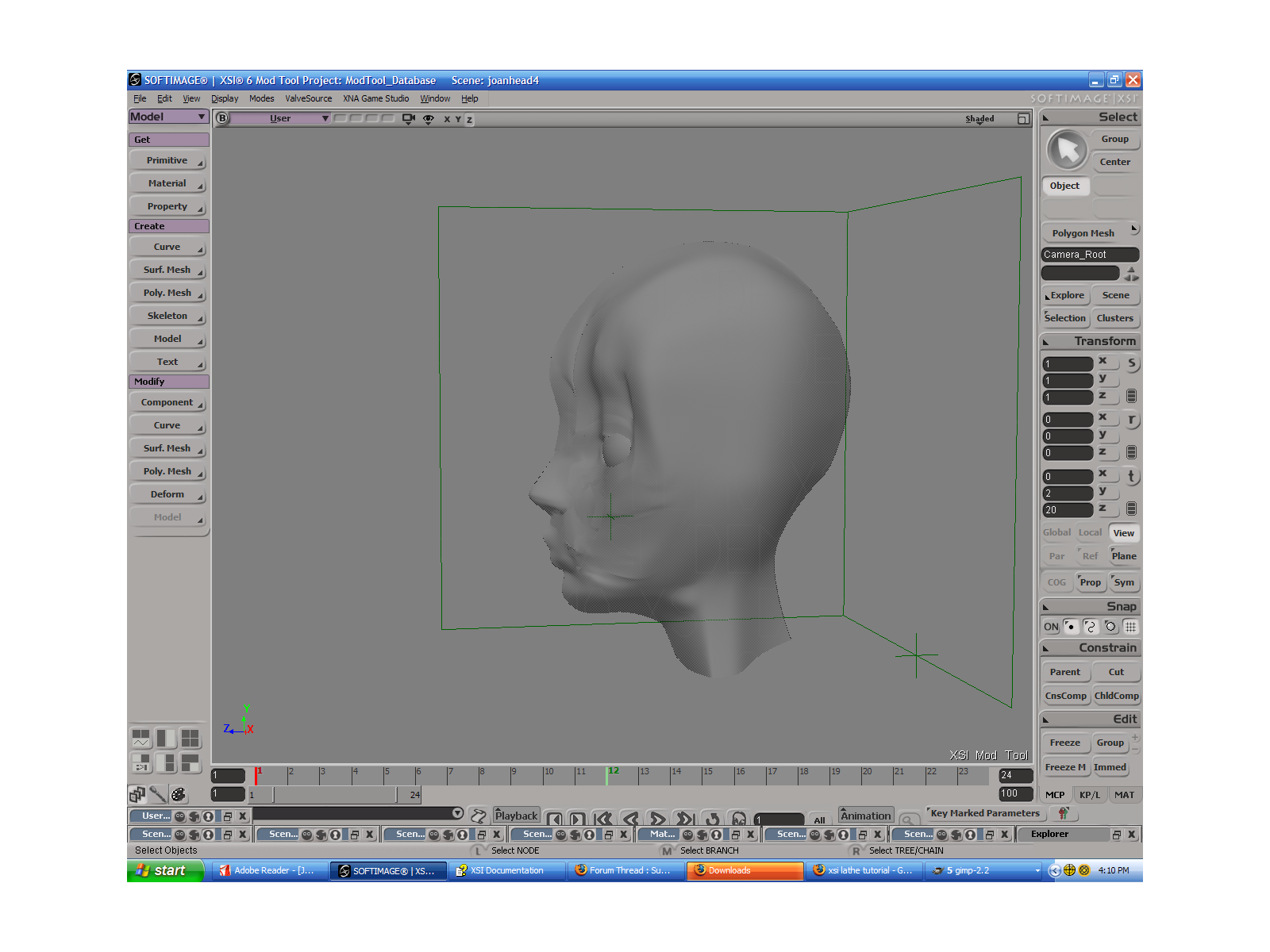
Some rough conceptual notes on Arcana Manor: I’ll illustrate them and provide screenshots, links, and notes later. For now, here are the ideas that have been percolating while I’ve been working in Torque and XSI (more screenshots soon).
The magic system of Arcana Manor will be deeply tied up with symbolic color. The system at its heart will be gestural, involving the tracing of geometric figures such as pentagrams and hexagrams using the wand, sword, pentacle, and cup, with precedents in Molyneux’s Black and White as well as Arcane Studio’s Arx Fatalis. But the sigils and figures that players trace will consist of burning, glowing light whose colors constitute a systematic language. I want these colors to be as wild and intense as possible given today’s hardware: violets so deep and burning that they seem to verge on ultraviolet, scarlets so fierce that they leave marks on your retinas. Not every aspect of the project can look good technically, but the magic system should. If I weren’t worried about excessive terminology, I’d call this system “chromomancy”: “chromo” for color and “mancy” for “speaking,” as in necromancy.
(On a side note, there are technical special effects packages, such as Arcane FX, that could be modified to work with a Torque-based game with a vivid magic system. The designers of Arcane FX are already halfway there in rejecting generic-looking spells and incorporating visual symbols of animated zodiacs, pentagrams, and smouldering summoned towers.)
(On a broader side note, Arcana Manor is now definitely a Torque-based game, not an Unreal mod. I bought the engine I’m using—Torque Game Engine Advanced– and am working in it.)
There are precedents for this type of color-based magic system in literature and gaming, and the more aware I and my art team are of it, the more effective it can be.
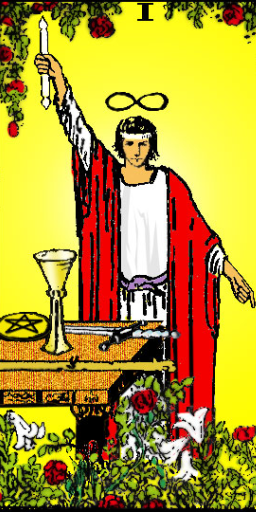
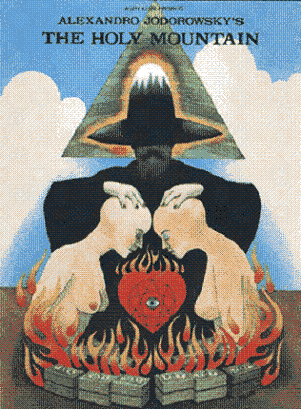
Color symbolism is apt in part because Arcana Manor is already tarot-based, and the tarot makes extensive use of color symbolism—so much so that the B.O.T.A., a contemporary esoteric group with roots in masonry and the Golden Dawn, publishes its tarot deck in black-and-white outlines, with instructions that initiates should color the images themselves in order to better acquaint themselves with the resonances of the images. The centrality of color to tarot work is part of why Alejandro Jodorowksy’s Holy Mountain has such a rich palette, especially in the scenes in the Alchemist’s tower, including the room with cards from the director’s own tarot deck lining the walls. If I could give two examples of the color palette I’m looking for, they would be de Chirico’s paintings and Jodorowksy’s film.
Here is a link to the Alchemist’s tower in The Holy Mountain as symbolic chamber, functioning on multiple levels
4 weapons scene in this film
http://www.youtube.com/watch?v=ik2GmeLaRm8&feature=related
Jodorowksy is actually an expert on the history of tarot, especially the Marseilles deck.
I associate surrealism with a color palette of bright, vivid shades—the kind of crimson, sapphires, and emerald hues not found in everyday life. In fact, one of the ideas that I keep returning to in terms of correspondences are colors and their symbolism. There is something about color, especially vivid color that evokes symbolism: the shades of the visible spectrum suggest the simultaneous variety and systematic division of life. In Ultima IV, each of the colors stands for a virtue, and in Eternal Darkness each Ancient and school of magic has its own color (red, green, and blue, with some added complexities hinted at through purple runes and “yellow magick” alluded to by Dyack in interviews as the suggestion of a possible sequel). These two games are the primary examples in my book, but symbolic color runs throughout other games, such as the five schools of magic and their corresponding colors in Magic: The Gathering, as well as the divisions of magic spells or “rotes” in Mage: The Ascension. The multiverse of the Planescape D & D campaigns seethes with a secret code of colors, often denoting portals between the planes, as in the color pools, portals, and curtains of the astral plane. The most exciting part of The Legacy of Kain: Defiance is imbuing the Reaver blade with elemental and other enhancements, which are tracked by a set of runes and colored dots and the bottom right portion of the interface. The more varied one’s selection of hues, the further one has progressed in the game. The whole system is beautifully set up with the colored pillars of Nosgoth in Blood Omen: The Legacy of Kain—symbolism is an emergent property, since even when Silicon Knights lost the rights to the franchise they had invented, Eidos had the basis for four sequels. Dyack says that his guild creates universes in which many stories can be told, and the capacity of his systems to keep generating
There is probably some historic basis for this idea in the poetry of the French symbolists, especially Baudelaire and Rimbaud. Baudelaire’s poem “correspondences” articulates the notion of systematic, synaesthetic linkages between sensations and ideas, perhaps in its most overt modern form. Rimbaud’s poem Vowels associates A, E, I, O, and U with colors, which some critics associate with the poet’s alchemical studies. The various stages of transmutation from iron to gold are designated with Latin color names: nigredo (black), rubedo (red) and albedo (white). Both Baudelaire’s and Rimabaud’s poems will be clues found as scrolls in the manor, and there may be an alchemical tome as well.
Other ideas:
A gigantic rubik’s cube with symbolic designs, whose solution opens doorways, provides powers, allowing players to reconfigure the game’s symbol system
This might not be a cube; it might be a weirder geometry, like the Lament Configuration of Hellraiser or the dodecahedron puzzle box that was tantalizingly alluded to but never modeled in the Infinity engine of Planescape: Torment, which relied (perhaps excessively) on text-based dialogues to solve puzzles
Parts of the manor might constitute a macro-level architectural cube or puzzle: cf. the colored, trapped rooms of Cube and the rubik’s cube 3d dungeon of the diabolically difficult wireframe CRPG, Wizardry IV: The Return of Werdna
The manor’s architecture is Gothic (besides its surreal, paradoxical Escher influences). It would be worth checking out some books on Gothic architecture, blueprints of mansions, and survival horror games that have successfully used this trope so as to figure out how to push it further. Realms of the Haunting, Eternal Darkness, Undying, Resident Evil but stranger, weirder, more labyrinthine and full of secrets (if that’s possible). This is Arcana Manor, and arcana are secrets, so hidden passageways, trap doors, pop-up staircases, trompe-de-l’oeil walls should be all-pervasive. The unfolding of secret spaces is why I played Castlevania: Symphony of the Night all the way through, twice, to get 196.7% castle completion, and why I still want to play it to 200.6% even after I’ve earned the game’s best “ending.” Come to think of it, all the Castlevania games, including the critically panned 3d versions, are an inspiration. There will be blog entries on the magnificent video clips of the Castlevania arcade game, which looks wicked, and the teaser for the 360/PS3 Castlevania that might make up for what looks like the awful Wii fighting game Castlevania: Judgement.
The enemies in my game, essential to provide combat obstacles, are demons. I want to push this aesthetic as far as it can go, and for that one model is Todd McFarlane. Nobody does demons like McFarlane: Spawn is, even ten or so years after the heyday of the comic and its excellent animated HBO series, absolutely gorgeous. The various attempts at a Spawn game have received mostly mediocre reviews for derivative Devil May Cry-style combat without the variety and grace of that series, but on one thing reviewers agree: the game looked devilishly good. While I’m at it, the hidden inspiration behind a lot of this game is Clive Barker’s cancelled Majesco title Demonik, whose premature termination after the construction of a successful alpha build is both tragic and inspiring in a back-handed way. This is the game that I most wish existed. It will get its own blog entry soon also.
Below are some of the correspondences upon which this magic system will be based. The last two columns are all important: its furthest metaphorical extent (the magician’s virtues, not exactly morally based but definitely tied into a code of imagination and belief) and its most concrete game mechanics.
The motto of this game, its “point” or one of them, might be summed up in an epigraph from Goethe’s Faust, spoken by the angels, which goes loosely: “he who ceaselessly strives, him we can save.” The redemptive side of the Faust legend.
|
|
|
|
|
|
|
|
|
|
|
|
|
|
|
|
|
|
|
|
Magic schools (obvious D & D)
|
Elemental (obvious also, cf. Soul Reaver, Zelda, etc.)
|
Powers of a Magician
(Levi, Crowley Jodorowksy)
|
How the metaphor plays out in gameplay
|
|
Wand
|
Alterative
|
Fire
|
Willing
|
Re-shaping an environment (freezing water, raising platforms)
|
|
Cup
|
Restorative
|
Water
|
Knowing
|
Mastering a body of symbols, gestures, maps
|
|
Sword
|
Aggressive
|
Air
|
Daring
|
Conjuring and facing demons
Overcoming obstacles (high chasms and abysses)
|
|
Pentacle
|
Protective
|
Earth
|
Keeping Silence
|
Not being overly chatty with deceptive or distracting NPC’s
Keeping Knossos’ secrets safe
|
|
|
|
|
|
|
|
|
|
|
|
|
Cf. Dante’s fourfold allegory
I’ll start working on a GUI for the magic system soon, since the Torque engine allows for as much custom interface design as the designer can program.