Monthly Archives: October 2008

Questing in Hyboria

As readers of Quests know, I am not the biggest fan of MMO’s for a variety of reasons, and yet they are the genre of games in which quests feature most prominently. Lately, I’ve enjoyed playing Lord of the Rings Online with Roger Travis, the director of the Video Games and Human Values Initiative, and Michael Abbott, one of the Initative’s senior fellows. These two players are great company, and LOTRO is also enjoyable because of the way in interweaves its epic quest line with Tolkien’s compelling narrative and imaginative world. However, as a loremaster (the game’s mage class, a hybrid of druid and standard magic user) I feel a little underpowered. As a previous post on magic systems indicates, I think this watering down of spellcasting probably has to do with Tolkien’s Catholicism: there is no magic in his world, only divine providence manifested through attunement to the natural world. This stance toward wizardry is philosophically subtle but does not result in the most exciting gameplay.

There is another currently operating MMO that I am deeply excited about playing (though not as excited as the rumored World of Darkness MMO planned to debut in 2011). Until 2011, there is Age of Conan: Hyborian Adventures.
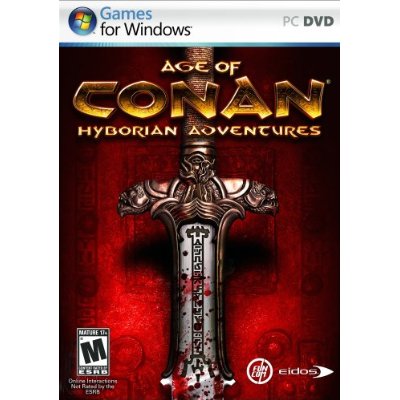
Age of Conan Cover

Age of Conan Cover

This MMO fits into a larger franchise of transmedia Conan products, whereby one can be immersed in a world of novels and short stories, art, movies, and games. This world is based on Robert E. Howard’s wild and vivid pulp fiction, which was in turn inspired by the mountainous terrain outside of Fredericksburg, Texas.

Robert E. Howard is a fascinating figure unto himself—a hard-drinking, manic-depressive Texan who was also unexpectedly romantic, vulnerable, and intelligent.
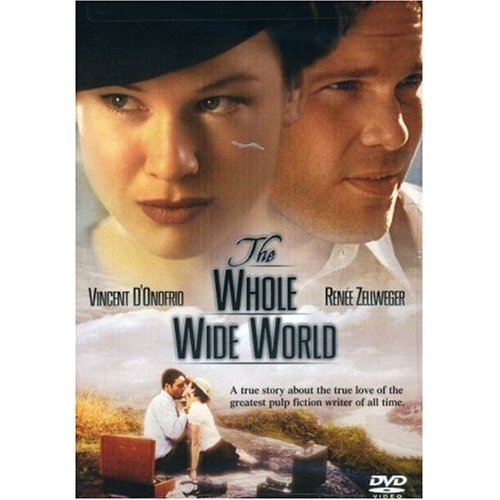
Theatrical Poster of the Whole Wide World

Theatrical Poster of the Whole Wide World

His courtship of schoolteacher Novalyne Price was documented in Price’s memoir, One Who Walked Alone, and tenderly portrayed in the critically acclaimed and excellent The Whole Wide World, starring Vincent D’Onofrio and Renee Zellweger. Howard pioneered the genre of sword and sorcery in Weird Tales¸establishing a long-running correspondence and close friendship with H.P. Lovecraft (and penning tales within the Cthulhu mythos). He also built an imaginative world of Hyboria, tinged with Ancient Egyptian mythology and a pantheon of Lovecraftian demons in addition to the standard trappings of swords and sorcery (which R. Howard himself helped make standard).

I’m drawn to Age of Conan in part because it promises a rich and potent magic system, in which the character class of demonologist commands both powerful flame and shock spells as well as infernal pets. The character Conan distrusts magic because it is evil, and the designers of AoC have embraced this dark vision of sorcery to create a system in which simultaneously weaving too many spells results in a damaging and potentially fatal effect called soul corruption. The demonologist, as far as I can tell, is a fusion of WoW’s mage and warlock, without the generic backstory of the former and the slow-acting poison-based spells of the latter. This is not to mention the Herald of Xlatothl, who excels at both melee combat and magic, as well as the Priest of Set, who can cast powerful electrical spells.

In addition to powerful graphics that make me glad I have 512 megabytes of video ram, the game boasts an engaging combat system, which eschews the point-and-click repetition of WoW and Everquest for a more versatile setup in which number keys can unleash attacks in different directions. If one wants to play Age of Conan, it’s probably better to do so now, since many gamers have balked at the game’s early technical glitches, resulting in a consolidation of the European and North American servers. I hope this particular world lasts for a long time, but it’s best to seize the day, especially given the unfortunate demise of Hellgate: London.

If quests in MMO’s are to improve, then gamers will need to support designers who deviate creatively from the standard model, including the decision to build an elaborate single-player questline through the first twenty levels of AoC. So, if anyone is up for an occasional foray into Hyboria with me, I’d welcome the company. The previously described Funhouse design project is my “main quest” at the moment (actually, finding a job is my main quest, but the Funhouse is my main side quest). Still, let us not lose sight of the good things in life: to crush our enemies, see them driven before us, and hear the lamentation of their women. :)

Game Idea: The Funhouse

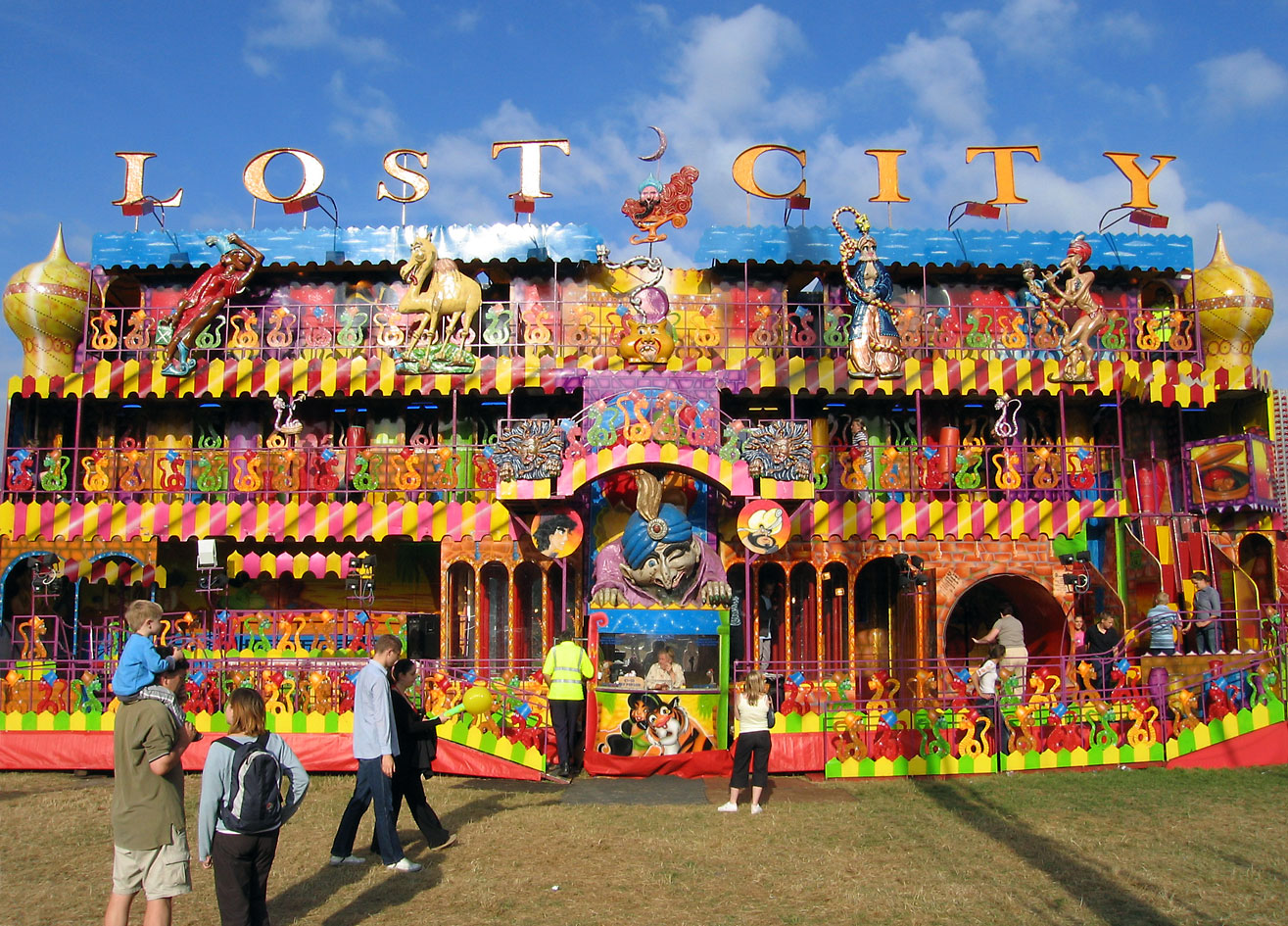
the funhouse, lost city

The Funhouse, Lost City

After the publication of Quests¸ I’ve been thinking for a while about a game project that would put into practice the various designs skillsets that I am trying to develop. The Aurora Toolset is one useful design tool, but it is only one of many options technologically. At the same time, acquiring skillsets without a project in which to showcase them is difficult and in some ways a little unproductive, since there is not much of a way to demonstrate one’s skills. Learning to program is fun and useful, and I’ll continue with it, but there ought to be a more tangible project to work towards in tandem with this. I’ve been slowly teaching myself C# and looking at various toolsets, starting today with the Unreal 2 Editor, and thinking about a mod group I could join or a project I could initiate myself.

I’ve always been fascinated with the virtual spaces of game design and their relationship to literary (and real) spaces, such as labyrinths and funhouses, so I was idly checking up on Austin’s most recent addition to its many haunted houses. The House of Torment is a run of the mill haunted house, distinguished only by its size and amount of gore, but it now has a sister haunted house: Illusion Manor. Ever since high school, I’ve often dreamed of an interactive funhouse that would hearken back to the adventure games and dungeon crawls of my youth.

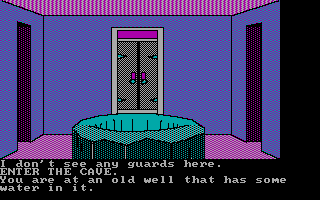
Screenshot from The Demon's Forge, a surreal graphic adventure game

Screenshot from The Demon

(I wrote a short story about one a long time ago which had little plot but a lot of description, because it was the space that mattered, and not just as thin self-referential postmodern metaphor as in John Barth’s Lost in the Funhouse. What mattered was the actual description of these dream-spaces, these architectural suspense novels that populated the amusement parks of the 1950’s but have all but vanished.) I’ve been disappointed that Richard Garriot’s famed interactive haunted house has been out of operation for years. But Illusion Manor is only in its second year, and what distinguishes it from the standard haunted house is that it requires participants to duck, crawl, jump, swing and otherwise navigate treacherous obstacles. Sounds a lot like a quest space, for those who have seen the last video that Kris Maxwell and I made.

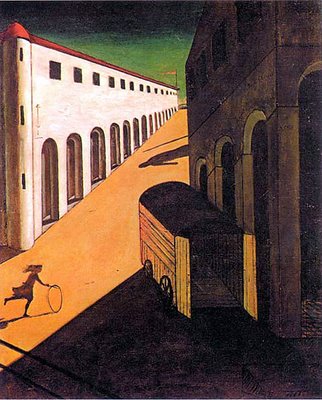
So I was thinking about going to Illusion Manor for fun and inspiration. But, while making my first room in the Unreal 2 Editor, I noticed that the multi-colored grid on the wall could look just like a funhouse. And then I thought of an idea for a game in which players explore a surreal funhouse, built in the style of M.C. Escher and Giorgio de Chirico (the first featured near the end of our quest video and the second both my favorite painter and the direct visual inspiration for Ico, a game liberally featured in the same video).

The Melancholy and Mystery of a Street by De Chirico

The Melancholy and Mystery of a Street by De Chirico

This would be a virtual Illusion Manor, but not slavishly so. Rather, it would hearken back to the funhouses of the 1950’s, many of which are chronicled in loving detail on this site. The game would be at its core a 3-D platformer in which players had to stay alive while navigating perilous environments, like swaying bridges, tilting rooms, and rotating tunnels. In terms of narrative, the funhouse was built by a mad genius dying of cancer, evangelizing about the necessity of fun for the human spirit. But the key word here is mad genius, meaning that many of the challenges are deadly. The core mechanic still needs development. Because I’m fascinated with magic systems, I’m tempted to include one in this game (à la the spell-casting FPS action of Undying, itself built in a heavily modified Unreal 2 engine), but that may be another game. Puzzles fit more organically into a funhouse if one thinks of midway games, but shooting ducks or wacking moles isn’t quite what I have in mind. Standard adventure fare (collecting keys to hidden doors) is more along tonally appropriate lines, and the 3D element is essential for the labyrinthine feel that I’m envisioning. If the environmental challenges were sufficiently interesting, combat might not be essential, but it certainly would make the game more exciting. Killer clowns and maniacal magicians with the look of the recently remade 1970’s exploitation flick Wizard of Gore might be even better, especially if I decided to play up the haunted side of this funhouse. That might justify players having weapons and spells of some kind.

But the space I am absolutely sure of, so I’ll start with the level design and overall visual/conceptual look first.

I can do a lot of the design work myself in terms of putting together a design doc and the first level prototypes, as well as scripting events and working on a core mechanic. Help with concept art, 3-modelling, and eventually programming would be useful. I’ll eventually need to assemble a team for this one. That’s why I’d like to put this idea out in the open: because the risk of someone taking an idea is less significant than the benefit of working collaboratively.

So, to sum up here are the key points:

Game idea

  • Funhouse
  • Surreal
  • Escherian, De Chirico
  • Virtual Illusion Manor
  • Hearkens back to 1950’s funhouses
  • Built by mad genius dying of cancer, evangelizing about the necessity of fun for the human spirit
  • But b/c he is mad, a dangerous funhouse
  • Death is a possibility
  • A platformer
  • Swaying bridges, tilting rooms, staying alive while negotiating perilous environments

Magic Systems and Meaningful Scripting

Runes in Eternal Darkness

Runes in the Magic System of Eternal Darkness

One of my next projects will be an article comparing the magic systems of various games, both conceptually and in terms of their underlying quantitative mechanics, as one example of how interactive symbolism can be programmed. As readers of Quests know, I regard programming as a form of procedural, interactive writing, which unfolds according to a set of rules that both constrain and facilitate player actions and interpretations. For example, the magic systems of role-playing games (tabletop, single-player, and MMO) comprise rigorous, quantitative rules for altering the physical and sometimes mental reality of a particular game world. Because these systems often involve glyphs, runes, and incantations, there are opportunities to encode meaning into a core game mechanic, as in the tabletop game Mage: The Awakening or the elaborate cosmology of Eternal Darkness.

Questions for research include:

  • How have different table-top RPG’s, CRPG’S, action-adventure games, and MMO’s implemented magic systems?
  • What are the origins of magic systems in fantasy novels? For example, the convention of having magic users memorize spells that are then erased from their memory after being cast derives from Fritz Leiber, but not from Tolkien (who eschewed direct references to the concept of magic in his work).
  • What is the relationship between game systems of magic and real occultist systems? (This treads on difficult ground, because of many gamers’ understandable discomfort with the association by fundamentalists of Dungeons and Dragons with black magic. However, Gary Gygax himself encouraged dungeon masters to consult encyclopedias of the occult as reference works, and Silicon Knights did thorough research into actual historical arcane systems in order to build the elaborate spell-casting system of Eternal Darkness. The table-top role-playing systems Nephilim and Mage: The Awakening both embrace mystical lore as metaphors explored through their game mechanics.)
  • Most importantly, as relates to programming practice:
  1. How did the World of Darkness mod (WoDMod) script the magic system of the Mage tabletop game into Vampire: The Masquerade Redemption?
  2. How do custom NWN scripters make their own spells?
  3. How could we as designers learn from past design of magic systems in order to make our own games’ magic systems both more fun and metaphorically resonant, so that we invest this aspect of fantasy with all its potential for symbolism rather than reducing it to the glitz and glamor of flashy visual effects without substance?

Castlevania, Legacy of Kain, and the Gothic in Gaming

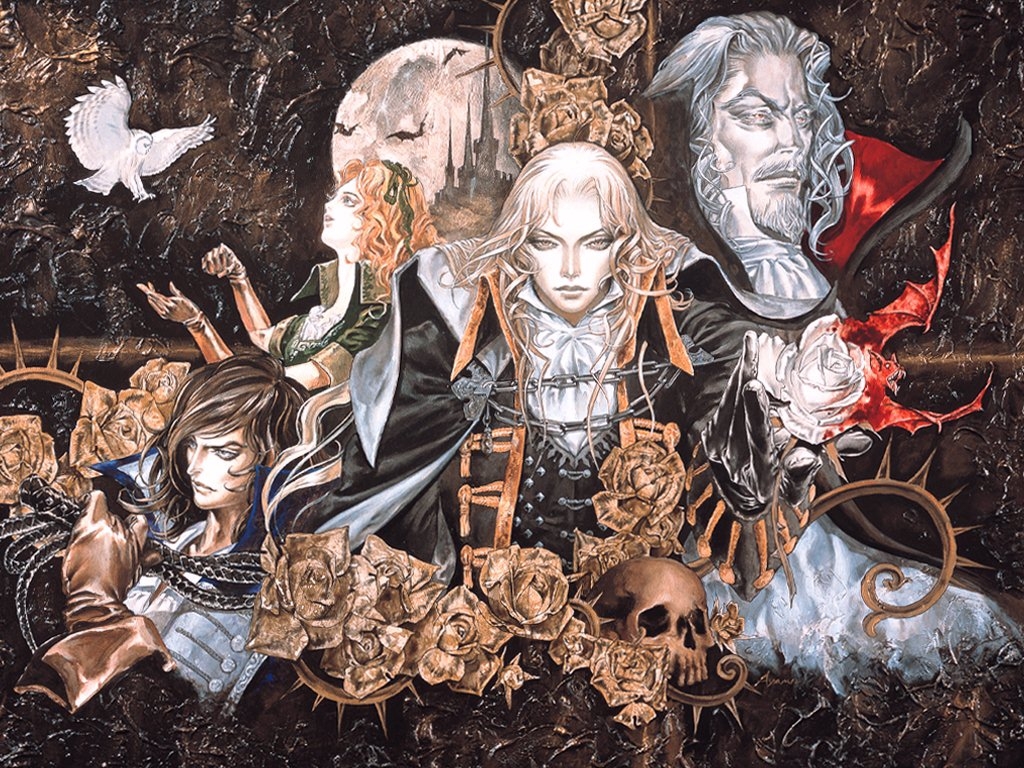
My mainstream Nintendo game franchise is Castlevania. Some people love The Legend of Zelda, others Metroid, but I’m a Castlevania fan. Which is not to say that I have played a lot of Castlevania: only half of Symphony of the Night and Curse of Darkness, although I have watched a friend play through most of Simon’s Quest.
One reason for my enthusiasm has to do with Castlevania’s haunting music and its classical influences, especially in the tracks “Vampire Killer” and “Bloody Tears,” which are touchstones of my musical tastes. (When I played in a rock band, I often gave “it sounds like Castlevania” as a reason for covering songs by a variety of bands, from Opeth to Iron Maiden. Yngwie Malmsteen’s neoclassical metal, characterized by its use of the melodic minor scale and techniques like pedal point, also strongly resembles Castlevania stylistically). This essay by a musicologist offers excellent, comprehensive analysis of Castlevania music.

Another reason for my love of Castlevania has to do with level design and the spaces of the Belmonts’ quests, which were based in part on actual castles.

The third and most important reason for my love of Castlevania is that it is a classic example of Gothic gaming. Laurie N. Taylor is the authority on survival horror games and their relationship to the Gothic, which was her dissertation topic. My understanding of the Gothic is much less rigorous and detailed than Laurie’s, but my definition does involve a set of criteria.

By a Gothic game, I mean one that is
• Darkly romantic
• Horror influenced
• Sometimes haunted by demonic overtones and/or undertones
• Inclusive of vampires, werewolves, angels, demons, and black magic
• Often set in a castle, dungeon, dark forest
• Brooded over by an atmosphere of mystery and the arcane which lends itself to symbolism.

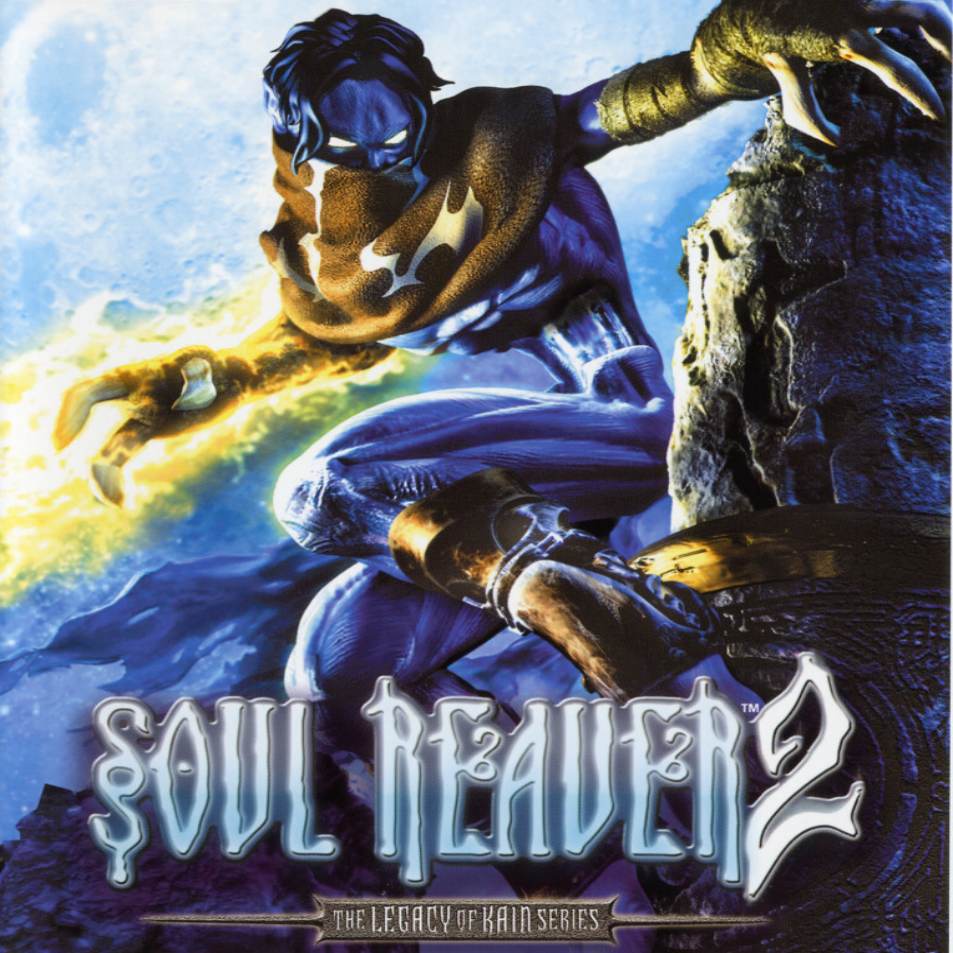
Of Gothic games, I am currently most interested in the Legacy of Kain series, of which I have played all of Blood Omen: The Legacy of Kain as well as parts of Soul Reaver 2 and Defiance. In terms of the relationship between gaming and literature, I am drawn to the Legacy of Kain series and its Miltonic overtones, as alluded to in the epigraph to Andrew Plotkin (a.k.a. Zarf’s) chronology of this time-bending franchise. Plotkin heads his diagram with the quotation:

“We attempt to trace the history of Raziel, who was cast down, and that ancient device which is lately called the Soul Reaver.”

Plotkin’s eighteenth-century prose style is consciously Miltonic, especially in the phrase “who was cast down.” The parallel is between Raziel and Milton’s Lucifer: both rebels against a divine being whose motives and actions are sinister and suspect, perhaps conferring upon the fallen angels the status of romantic hero or anti-hero.


I’ll have more to say about the Gothic in gaming and its relationship to design as these blog entries continue.

Reviews and Mentions of Quests

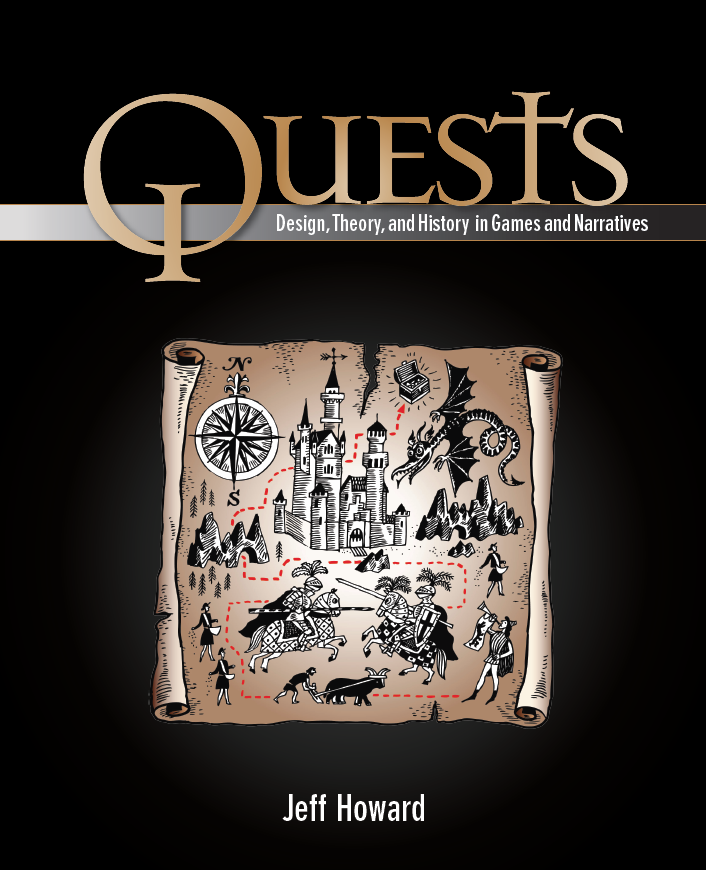
Below is a list of reviews and mentions of Quests: Design, Theory, and History in Games and Narratives. They were graciously collected and excerpted in this format by my publisher, AK Peters.

Reviews

Slashdot (External Link)

September 2008

Jeff Howard’s Quests: Design, Theory, and History in Games and Narrative is an exploration of … quests in both literary and gaming contexts, comparing and contrasting their appearances in each medium and striving to bring the two worlds closer together by imbuing game quests with more meaning. … I look forward to the dialog his book will inspire. He would have us re-examine the game quest in terms of the narrative quest, and apply those lessons to gaming. The book is well worth a read, both as a lesson plan for making the activity of questing more meaningful, as well as a first step towards giving games that rely heavily on quests—especially MMOS—more meaningful goals.

A reader at GoodReads.com:

“A must-have for every game designer or anyone who wants to understand questing in a more sophisticated way. This book has it all – mythology, Joseph Campbell, Carl Gustav Jung, some tutorials and a lot of wisdom :) Another shining piece in my bookshelf.”

Included on the amazon.com list “Must Read Books for Aspiring Game Designers” by Sean M. Baity, Senior Designer at Electronic Arts


Jill Walker Rettberg at jill/txt (External Link)

August 2008

If you’re doing work on role-playing games of any kind, or planning to teach a course [on RPGs] of your own, this is a great resource.


Clay Spinuzzi (External Link)

May 2008

“It’s an unusual book, but an illuminating one within these areas.”


Andrew Dobbs at Design(ish) (External Link)

May 2008

“According to Jeff Howard …, “a quest is a journey across a symbolic, fantastic landscape in which a protagonist or player collects objects and talks to characters in order to overcome challenges and achieve a meaningful goal.” The most important part of this definition comes at the end, as I believe the foundation of the quest journey is “to overcome challenges and achieve a meaningful goal.” Developing a successful quest means creating a meaningful interaction for the player.”


Michael Abbott at the Brainy Gamer (External Link)

April 2008

“Certain scholars like Jeff Howard … and Matt Barton … have written rich, analytical, and well-annotated books on the subject, and I will use both in my course.”


Games Across Media (External Link)

March 2008

“This unique take on quests, incorporating literary and digital theory, provides an excellent resource for game developers. Focused on both the theory and practice of the four main aspects of quests (spaces, objects, actors, and challenges) each theoretical section is followed by a practical section that contains exercises using the Neverwinter Nights Aurora Toolset.” (Barnes & Noble)


Gameology (External Link)

February 2008

“Quests is an excellent tool for teachers … for teaching games, media, writing, or other areas that include theory and application. Many other books exist that are excellent for game studies classes and for game creation classes …, but Quests fills the particular niche of classes that often have titles like ”introduction to media studies,“ ”writing for new media,“ ”first (or second, or later) semester writing across the curriculum.“ Quests would also be an excellent choice as a supplemental text for more advanced classes, helping graduate students or faculty connect their research areas to new ways to represent, research, and teach using games.”


grand TEXT auto (External Link)

February 2008

“Jeff Howard’s Quests is an incisive and highly accessible book that leads the reader on an exploration of literature, computer games, and a connection between them.”


Daniel Erickson, Principal Lead Writer, BioWare Austin

February 2008

“Howard impressively handles bridging the gap between interactive fiction and classical literature with a thoroughly researched and well-argued treatise that focuses itself squarely on the two mediums’ connections and similarities.”


Nick Montfort, Assistant Professor of Digital Media, Massachusetts Institute of Technology

February 2008

“Jeff Howard’s Quests is an incisive and highly accessible book that leads the reader on an exploration of literature, computer games, and a connection between them. Howard includes valuable tutorials and exercises which draw on literary works, including Sir Gawain and the Green Knight, while also dealing with the specifics of how to use tools to create computer RPG modules. The book offers useful discussion of the history of adventure games and detailed analysis of quest elements using concepts from narrative theory, poetics, game studies, and other fields. Quests equips students and scholars as they journey onward to read, play, and fashion games and narratives.”


Dr. Susana Tosca, Associate Professor, IT University of Copenhagen

February 2008

Howard is a true Renaissance man in these electronic times. He merges his knowledge and love of literature with his enthusiasm for computer games and the unexplored possibilities of the new medium. Human intellectual activity has a common base, be it expressed in the form of poems or computer games, and Howard shows us some of the most stunning connections between the old form of quest literature and the new challenges of games.“

Introduction

Hi. I’m Jeff Howard, author of Quests: Design, Theory, and History in Games and Narratives. I received my Ph.D. in English from the University of Texas at Austin in 2007. My dissertation was about Gnosticism, postmodern fiction, and computer-assisted teaching. Then, I wrote Quests, a book about strategies for designing meaningful quests in games.